British Library
The UK's national library sits next to St Pancras on Euston Road. Its Treasures Gallery, showing some of the most remarkable items in the collection, is free to visit, and paid exhibitions run alongside it.
Things to do
Museums within reach of LNER stations, from national collections to small local museums. 52 ideas in total.
The UK's national library sits next to St Pancras on Euston Road. Its Treasures Gallery, showing some of the most remarkable items in the collection, is free to visit, and paid exhibitions run alongside it.
Two million years of human history across more than 50 galleries in Bloomsbury, with free general admission. Booking a free timed ticket in advance is recommended for busy periods.
A small museum telling the story of London's canals, housed in a building put up for the ice trade and with its own wharf basin. It opens Tuesday to Sunday and on bank holiday Mondays.
A free museum and library at 183 Euston Road exploring health, medicine and the human body through historic objects and contemporary art. Its permanent and temporary exhibitions are free to enter.
The town's museum on St George's Way covers Stevenage from prehistory to the New Town era. As of September 2026 it opens Wednesday to Saturday.
A free museum in a former mansion on Priestgate, covering everything from Jurassic marine reptiles and Roman Peterborough to craftwork made by Napoleonic prisoners at Norman Cross.
A volunteer-run museum on St Peter's Hill, housed in the former Carnegie Library, telling the stories of Grantham and the surrounding area. As of September 2026 it opens Thursday to Saturday, with free admission.
A museum devoted to the seventeenth-century Civil Wars and Newark's part in them, with family days, walking tours and talks through the year. Admission is free for local residents and under-25s.
A large collection of aircraft on part of a former RAF airfield at Winthorpe, open most days of the year, with regular open-cockpit events.
A social history museum in Victorian militia barracks on Burton Road, with around 250,000 objects including a First World War tank and galleries on the Royal Lincolnshire Regiment.
A free museum on Grove Street covering the history of north Nottinghamshire from the earliest times to today. It is closed on Wednesdays in term time and on Sundays.
A free cultural hub on Waterdale combining the city museum, art gallery, library, the King's Own Yorkshire Light Infantry museum and a Rail Heritage Centre. Open Monday to Saturday.
A free museum at the former Caphouse Colliery telling the story of mining in England. It opens Wednesday to Sunday; its underground tours were paused in September 2026, with reopening to be announced.
Founded in 1819 and since 2008 housed in the former Mechanics' Institute on Millennium Square, the museum hosts special exhibitions alongside its permanent displays.
Home of the National Collection of Arms and Armour, in a purpose-built museum at Leeds Dock that opened in 1996. General entry is free.
An award-winning museum of the history of medicine next to St James's University Hospital, reopened in 2021 after a major refurbishment. Open daily except Tuesdays in term time.
Set in Moorside Mills, this museum keeps printing and textile machinery in working order for regular demonstrations. Buses run from the city centre.
Seven floors of galleries on photography, television, sound and the science of light, plus cinemas including Europe's first IMAX screen. Entry is free and it opens daily.
The Brontë family home in Haworth, now a museum run by the Brontë Society and devoted to the sisters' lives and writing. Closed on Tuesdays.
A free museum of local heritage in a grand neo-Gothic mansion, surrounded by award-winning public gardens. Closed on Mondays.
A free museum in Skipton Town Hall whose treasures include a 1623 Shakespeare First Folio, prehistoric and Roman finds and furniture by Robert 'Mouseman' Thompson. Closed on Tuesdays.
A small, entirely volunteer-run museum at 5 The Green preserving the history of Horsforth. It opens on Saturdays and on Sunday afternoons, with free admission.
A North Yorkshire Council museum in the restored 1842 Pump Room, telling the story of Harrogate's spa from the discovery of its springs to twentieth-century treatments. Closed on Mondays.
Housed in the 1871 Dock Offices, the museum tells Hull's seafaring story and has been refurbished as part of the Hull Maritime project. Entry is free, though booking ahead is advised at busy times.
A hands-on transport museum in the Museums Quarter with a recreated 1940s high street, a vintage tram and early cars and bicycles covering around 200 years of travel.
The birthplace of William Wilberforce is now a museum about the transatlantic slave trade, its abolition and its legacy. Some upstairs galleries contain distressing material that may not suit younger children.
A ride through a reconstruction of Viking-age Jorvik, built on the site where the objects on display were excavated, followed by a gallery of finds. Pre-booking is essential and bag checks apply.
A social history museum inside former prison buildings from the 18th century, on the site of the castle built by William the Conqueror.
Opened in 1830, the Yorkshire Museum covers archaeology, natural history and geology, including Roman York. It sits in riverside gardens that are pleasant for a break.
A museum in parkland by the Tees, best known for its walk-through Victorian street, with galleries, changing exhibitions and riverside paths.
Opened in 1978, 250 years after James Cook was born on this spot in Stewart Park, Marton. Displays follow his life from rural Yorkshire to his Pacific voyages.
A local and natural history museum beside Albert Park, with eight permanent galleries including Linthorpe Art Pottery and the work of the Victorian designer Christopher Dresser. Open Tuesday to Sunday.
Durham University's museum devoted to the art and archaeology of North Africa and Asia, from ancient Egypt to modern China, with changing special exhibitions.
Free science and local history museum whose star exhibit is Turbinia, the pioneering steam-turbine ship.
Natural history and ancient civilisations under one roof, first opened in 1884. Free entry; the museum suggests weekday afternoons after 2.30pm or Sundays for a quieter visit.
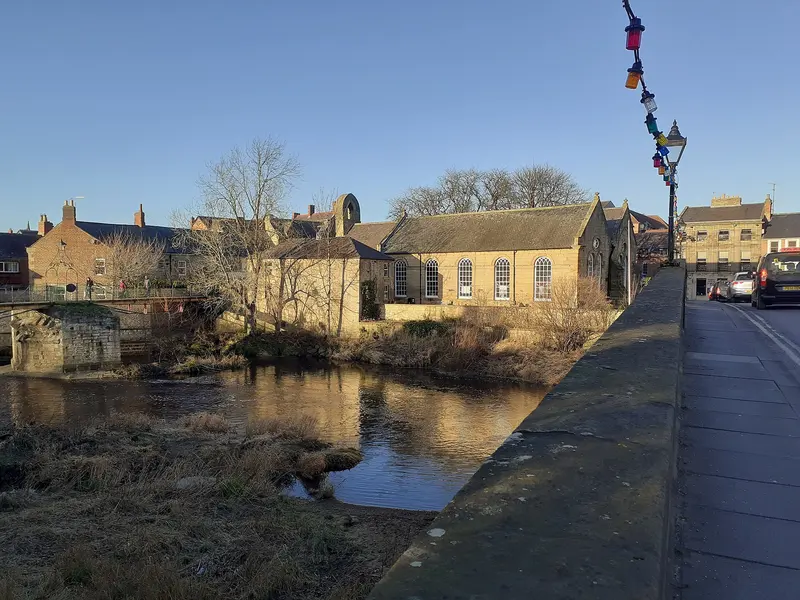
Billed as the first bagpipe museum in the UK, it holds a large collection of historic pipes, especially Northumbrian smallpipes and Border pipes. Free entry; closed on Sundays.
The house where John Muir was born is now a museum about the inventor, botanist, writer and campaigner, towards the north end of the High Street.
Scottish history and international collections in two connected buildings on Chambers Street, from natural history to science and world cultures. Free entry, with charges for some exhibitions.
Formerly the British Golf Museum, it traces more than 400 years of the game through immersive galleries, opposite the Royal and Ancient clubhouse.
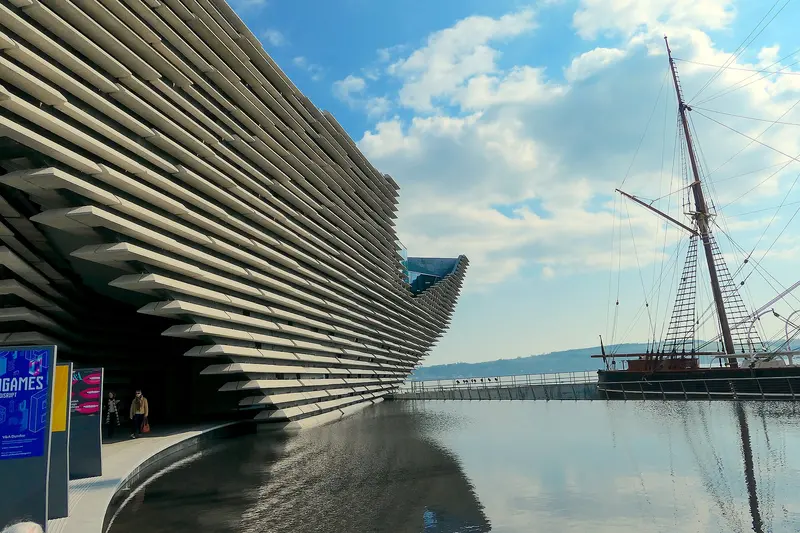
Scotland's design museum stands on Dundee's waterfront and stages major exhibitions – David Bowie: On Tour opens on 4 November 2026. General admission is free (as of September 2026), with charges for some exhibitions.
A refurbished mill building where working machinery and personal stories explain how jute shaped Dundee's industry and the lives of its mill workers.
Built in 1813 as the shore station for the Bell Rock Lighthouse, the Signal Tower became a museum in 1974 and now covers the lighthouse, the harbour and Arbroath's fishing heritage.
Montrose Air Station opened in February 1913 as Britain's first operational military air station and closed in 1952. The volunteer-run museum includes a full-size replica B.E.2a aircraft and tells the stories of those who served there.
Founded in 1842 by the town's Natural History and Antiquarian Society, this temple-fronted museum covers local, natural and maritime history, from early archaeology to the Jacobites. Entry is free (as of September 2026).
The harbourside Tolbooth is the oldest building in Stonehaven and, as a volunteer-run museum, displays items from its days as a prison and from the town's past.
Set on historic Shiprow above the harbour, the museum traces Aberdeen's relationship with the sea, from trading, fishing and shipbuilding to offshore energy. Free entry (as of September 2026).
Volunteer-run themed rooms covering Dunblane's long history, from a 4,000-year-old necklace to the Battle of Sheriffmuir and the Murray brothers' tennis careers. Free entry; open April to mid-October, Monday to Saturday (2026).
Home of the Stone of Destiny, the ancient coronation stone, alongside collections that place Perth and Kinross at the centre of Scotland's story, in an Edwardian hall transformed by the architects Mecanoo. Viewing the Stone is free, and tickets can be booked in advance.
Balhousie Castle holds the story of the Black Watch, Scotland's oldest Highland regiment, from its formation in 1739 onwards, with a bistro and shop.
A small, free museum on Main Street telling the story of Clan Macpherson through artefacts such as the Black Chanter and the Cumberland Medallion. Open 1 April to 31 October (2026).
Over 35 historic buildings across a mile-long site, from a 1700s township to 20th-century homes, with costumed interpreters. Entry is free; the 2026 season runs from 1 April to 25 October.
Free museum on Castle Wynd covering the history, culture and art of the Highlands. Hours are shorter from November to March, and it is closed on Sundays and Mondays.
Nothing matches that region yet. Try another region or type.
Distances are approximate and measured from the station. Opening times, prices and booking rules change, so check the official website before you travel.
Check live times and fares with LNER, or compare prices on Trip.com. Book early for the best chance of a cheaper Advance fare.